Showing posts with label SABAH. Show all posts

Tuesday, January 27, 2026

THE KINARUT MANSION


Deep in the jungles of Sabah, near the town of Kinarut, lie the skeletal remains of the Kinarut Mansion (locally known as Rumah Besar Kinarut). Once a symbol of colonial opulence, it is now one of Malaysia’s most notorious "haunted" landmarks.

The History: A Failed Empire
Built between 1910 and 1914, the mansion was a rare Greco-Roman style manor in North Borneo. It was commissioned by W.F.C. Asimont, the German manager of the Kinarut Rubber Estate.
  • The Design: It featured 45 doors, 152 windows, and 42 massive chandeliers. It was built by an Indian architect using hundreds of Javanese laborers.
  • The Fall: Asimont died in 1919 in Surabaya. Following his death, the rubber trade declined, and the British North Borneo Chartered Company demolished the house in 1923 for reasons that remain somewhat mysterious.
  • The Rediscovery: The jungle reclaimed the site until the 1990s, when ruins were rediscovered by forestry workers. It was gazetted as a historical site in 1994.
The Hauntings: What Lurks in the Ruins?

The mansion's reputation for the supernatural stems from both its tragic decay and local folklore.

EntityDescription & Sightings
Hantu TinggiThe "Tall Ghost." Locals report a figure so tall its head is lost in the clouds, often disguised as one of the towering trees surrounding the ruins.
The PontianakA vengeful female spirit. Visitors have reported hearing high-pitched wailing and smelling the sudden, cloying scent of jasmine (a traditional warning sign).
The "Follower"Many paranormal investigators and media crews have reported the sensation of being followed or watched intensely while walking the 200-meter avenue of crumbling columns.
ApparitionsFast-moving shadows and "white figures" are frequently sighted darting between the remaining stone pillars at dusk.

Visiting Today
The ruins consist mainly of stone staircases leading to nowhere and weathered Greco-Roman columns. While it is a gazetted historical site, the atmosphere remains heavy and eerie due to the encroaching secondary forest.
  • Location: Near Kinarut, about 30 minutes from Kota Kinabalu, close to the Police Training Centre (PULAPOL).
  • Vibe: It is a favorite spot for "Urbex" (urban exploration) and "Dark Tourism."
Note: If you visit, locals often advise staying respectful and avoiding "clowning around," as the site is believed by many to be inhabited by Orang Bunian (hidden spirits) or guardians of the forest.

Google Gemini Ai
27 January 2026: 8.11 p.m

THE AGNES KEIGH HOUSE,SANDAKAN, SABAH


Perched on a hill overlooking Sandakan Bay in Sabah, Malaysia, the Agnes Keith House (formerly known as Newlands) is one of the region's most famous "haunted" landmarks. While it is officially a museum dedicated to American author Agnes Newton Keith, its reputation for paranormal activity is so ingrained that it is now a pillar of Sabah’s "Dark Tourism" initiative.

The Haunting Legends
What makes this house unique is that the primary source for the hauntings is the author herself. Agnes Keith, despite claiming she didn't believe in ghosts, documented several eerie experiences in her writings.

1. The "Tall Woman" Apparition
Agnes frequently wrote about seeing a tall, gaunt woman in the house. In her book White Man Returns (1951), she described seeing the figure every day:

"I don't believe in ghosts. But every day I see a tall woman saying goodbye to her husband, picking up her baby and going down the street alone, standing at the end of the street and looking back."

2. The Bandaged Figure
After the Keiths left in 1952, the house was occupied by Rosemary Carlson (wife of the next forest conservator). Rosemary reported waking up at dawn to find a pale-faced woman with a white bandage around her head leaning over her bed and staring at her. The encounter was so terrifying that she reportedly passed out.

3. Modern Sightings
Museum staff, security guards, and visitors have reported:
  • The Stairs: A female figure seen standing on the wooden staircase or vanishing into corners.
  • The Roof & Windows: Locals have claimed to see a lady looking out from the upper windows or even standing on the roof of the house at night.
  • Auditory Phenomena: Sounds of doors opening and closing in empty rooms.
Historical Context
The "haunted" nature of the house is often linked to the heavy history of Sandakan during World War II:
  • War Trauma: The original house was destroyed during the Japanese occupation. Agnes and her family were held in internment camps (recounted in her famous book Three Came Home).
  • The Rebuild: The current timber house was rebuilt in 1946–1947 on the exact same foundation as the destroyed home. Some believe the "energy" of the previous structure remained.
  • Discovery of Remains: During her time in the garden, Agnes famously found a human skull grown into her orchids and a rusting sword nearby—grim reminders of the violence that occurred on the grounds.
Visiting Today
The house is now a beautifully restored museum under the Sabah Museum Department. It features colonial-era furniture, Agnes's personal belongings, and a gallery detailing her life.
  • Location: Jalan Istana, Sandakan, Sabah.
  • Dark Tourism: Recently, the Ministry of Tourism has even considered "night stays" or camping for paranormal enthusiasts who want to experience the atmosphere after hours.
Google Gemini AI
27 January2026:8.01 a.m

Tuesday, January 20, 2026

SABAH FOLKLORE: HUMINODUN


In the rich tapestry of Malaysian folklore, the story of Huminodun is perhaps the most sacred legend of the Kadazan-Dusun people of Sabah. It is not just a myth but the spiritual foundation of the Kaamatan (Harvest Festival) and the famous Unduk Ngadau beauty pageant.

Here is the story of her sacrifice and her lasting legacy.

The Legend of the "Transfigured Sacrifice"

1. The Divine Origin
In the beginning, the world was ruled by the almighty creator god, Kinoingan, and his wife, Suminundu. They had two children: a son named Ponompulan and a daughter named Ponompuan (later known as Huminodun).

According to legend, the son rebelled and corrupted the hearts of humanity. In response, Kinoingan punished the world with the Seven Scourges, the most devastating being a great famine that turned the land barren and left the people starving.

2. The Ultimate Sacrifice
Seeing the suffering of the people, Ponompuan was moved by deep compassion. She realized that only a "transfigured sacrifice"—the life of a divine being—could save humanity. She willingly offered herself to her father to be sacrificed.

With a heavy heart, Kinoingan (or in some versions, Suminundu) performed the sacrifice. Huminodun’s body was planted into the earth, and from her remains, life sprouted:
  • Flesh: Became rice (padi).
  • Head: Became coconuts.
  • Bones: Became tapioca.
  • Teeth: Became maize (corn).
  • Fingers/Toes: Became ginger and bananas.
3. The Rebirth

After the sacrifice, a bountiful harvest covered the land, ending the famine. Legend says that after seven days, a beautiful maiden emerged from a large storage jar (kakanan), representing the spirit of Huminodun reborn. This spirit is known as Bambarayon (the Rice Spirit), which is believed to reside in every grain of rice.

Cultural Significance Today
The story of Huminodun is celebrated every May during the Kaamatan Festival:
  • Unduk Ngadau Pageant: This is the most visible tribute to the legend. Unlike typical beauty pageants, the Unduk Ngadau seeks to find a woman who embodies Huminodun’s virtues—not just physical beauty, but also intelligence, grace, and a selfless heart. The title Unduk Ngadau roughly translates to "the girl crowned by sunlight."
  • The Magavau Ritual: This is a traditional ceremony performed by the Bobohizan (high priestesses) to call upon and appease the spirit of Bambarayon, ensuring a good harvest for the coming year.
  • Sacredness of Rice: Because rice is believed to be the "flesh" of Huminodun, it is treated with immense respect. Wasting rice or stepping on it is traditionally seen as an insult to her sacrifice.
Key Terms to Know
TermMeaning
KinoinganThe Supreme Creator God.
BambarayonThe Rice Spirit; the essence of Huminodun that lives in the crops.
BobohizanTraditional priestesses who act as the bridge between the human and spirit worlds.
KaamatanThe month-long harvest festival culminating on May 30th and 31st.
Google Gemini AI
20 January 2026: 3.34 p.m


Tuesday, December 16, 2025

HOTEL MEMORIES (SABAH & SARAWAK)

SABAH
1997: TM RESORT, KUNDASANG, SABAH
Also known as Sri Intan Resort, located at Jalan Kundasang Kauluan, near the Kundasang Mosque and offers panoramic view of Mount Kinabalu. It is owned by TM Malaysia (Telekom).
It features a restaurant, a rabbit house for children and offers rooms with balconies. Guests can choose between hotel-style rooms and chalets, with chalets often being recommended for their coziness and large balconies. 
My family and I went on holiday to Kota Kinabalu at our brother's house in Graceville, Kota Kinabalu. We spend a night at TM Resort (Sri Intan Resort) near the Kundasang Mosque, situated on the hills, a few minutes walks to Pekan Kundasang. 


2013: BEST WESTERN KINABALU DAYA HOTEL, KOTA KINABALU
A 3-star hotel, value for money hotel known primarily for its strategic location in the heart of Kota Kinabalu's commercial district.
The hotel was centrally located on Jalan Pantai, within walking distance of popular attractions like the Gaya Street Market, the waterfront, Wisma Merdeka, Suria Sabah Mall (which was still under development), and numerous restaurants and eateries. Its location was consistently praised as superb.
I stayed at this hotel during the Sabah Heart Week 2013 program which was held at the Suria Sabah Shopping Complex from 17-22 August 2013.


2013: HOTEL SEASON 2, KOTA MARUDU, SABAH
A specific, established local business hotel located at Jalan Lotong, Kota Marudu, Sabah. 
I stayed at this hotel with my colleagues during the Health Screening program at the Kota Marudu Community Hall on 24-25 August 2013.


SARAWAK
2012: HOTEL GLORY INN, BINTULU, SARAWAK
This hotel located at Parkcity Commerce Square, Jalan Tun Ahmad Zaidi, Bintulu, Sarawak. It is situated in the Bintulu city cener area, close to amenities such as the Park City Mall and various shops and restaurants.
I stayed at this hotel with my colleagues during the Sarawak Heart Week 2012 program held at Park City Mall, Bintulu, Sarawak from 18-20 May 2012.


Compiled by
Hj Zulheimy Maamor
Lembah Keramat, KL
16/12/2025: 12.15 a.m


Saturday, June 08, 2024

SABAH - KOTA MARUDU & OTHERS

HJ ZULHEIMY MAAMOR
7 JUNE 2024

From Kota Kinabalu, we left for Kota Marudu, Sabah on 22 August 2013 for the "Go Red for Women" campaign in collaboration with PEWANIS Kota Marudu, Sabah.
The journey from Kota Kinabalu to Kota Marudu takes 2 hours and 13 minutes with a travel distance of 119 km through several cities and towns such as Teluk Sepanggar, Inanam, Telipok, Tamparuli, Tuaran and Kota Belud.


Sepanggar is a sub-district of Kota Kinabalu, located around Sepanggar Bay which houses the Sepanggar Bay Container Terminal, Royal Malaysian Navy Base, Sepanggar Bay Oil Terminal, Universiti Malaysia Sabah (UMS), Universiti Teknologi MARA Sabah Branch, Kota Kinabalu Polytechnic and Kota Kinabalu Industrial Park. 


Passing through Universiti Malaysia Sabah (UMS) on the way from Kota Kinabalu to Kota Marudu. The university situated in Teluk Sepanggar, which is right along the path toward Tuaran dan Kota Belud.


Tamparuli is a small town and a sub-district of Tuaran, Sabah. Most of the people here are Kadazan-Dusun. In addition, there is also a Chinese community that does business here.
The famous Tamparuli Bridge, according to folklores, the construction of the bridge was led by British Engineer during the post-war colonial. The 200 metre long bridge is made famous by the Kadazandusun folk song "Jambatan Tamparuli" written by Justin Lusah in 1977. It's also known as the Lover's Bridge because of a heartbroken love story. 
The bridge has sustained so many floods events and one such significant event that was commemorated is a piece of a plaque erected in memory of 2 British soldiers who lost their lives on 18th May 1960 in trying to save the life of a local woman.


Tuaran is the capital of Tuaran District in the West Coast Division of Sabah. The town is bordered on three sides by the Tuaran River. It is located 34 kilometres (21 mi) north of the state capital Kota Kinabalu, and is strategically situated along the main highway linking Kota Kinabalu with the north of Sabah.


Kota Belud located in the West Coast Division of Sabah is famous for it weekly's Pasar Tamu or also known as open Market that happen every Sunday. After spending your time at the open market, visitors can explore the many attractions and campsites in Kota Belud. A river cruise along the Nanamun River is not to be missed as well.

KOTA MARUDU
Kota Marudu is the capital of Kota Marudu District in the Kudat Division of Sabah. Located 130 km north of the state Capital Kota Kinabalu. One of the place of interest that is available in Kota Marudu would be the Sorinsim Waterfall, located 40 km from the Kota Marudu town. 


DEWAN KOMUNITI KOTA MARUDU
The Heart Disease Health Program was held at the Kota Marudu Community Hall on 24 - 25 August 2013. A total of 182 people underwent a Health Screening Test during this two-day program.
This program was assisted by nurses from the Kota Marudu District Health Office.


While we were there, we stayed at Hotel Season 2, which is located approximately 300 meters from Kota Marudu Community Hall. Located at Jalan Lotong, staying here would have been a convenient choice after the 119 km drive from Kota Kinabalu. 


DINNER
Dinner organized by PEWANIS Kota Marudu was held at Kota Marudu Sabah Community Hall.


After completing the program in Kota Marudu, the next day we returned to Kota Kinabalu to return the Health Check items to Kuala Lumpur via the Kota Kinabalu Express Post.
We spent another night in Kota Kinabalu before continuing our flight back to Kuala Lumpur the next day.
That was the end of our program in Sabah in 2013, a memory that I can't forget because we were in Sabah a week after Hari Raya Aidilfitri... the song of Raya still echoed in Sabah when we ran the health program here.

Kota Marudu is quite a long way if you're in Kota Kinabalu but for us it was worth a visit, a small town but beautiful upcoming tourist destination.

There are many other areas in Sabah that I have visited but not many memorable photos have been saved. Districts such as Sandakan, Keningau, Tawau and so on.

KENINGAU
Keningau is Sabah’s fifth largest town and houses the largest park in Sabah which is the Crocker Range National Park. Visitors who wish to check out the traditional items of Keningau may head to the Keningau Handicraft Centre to know more details about the numerous handicrafts that’s available there.
My colleagues and I involved in the Heart Disease Health program at Sek. Keb. Sook, Keningau, Sabah on April 4, 2015.


BANJARAN CROCKER
Banjaran Crocker or Crocker Range is a mountain range extending from the West Coast until interior divisions of Sabah, that separates the west and east coast of Sabah. It is named after the British Administrator in North Borneo, William Maunder Crocker


Inobong Sub-Station is one of the substation around Crocker Ranger Park, which is the largest national park in Sabah with a vast mountain range. There are a few substations around the Crocker Range such as Inobong, Malungung and Buayan. 

SEPILOK, SANDAKAN
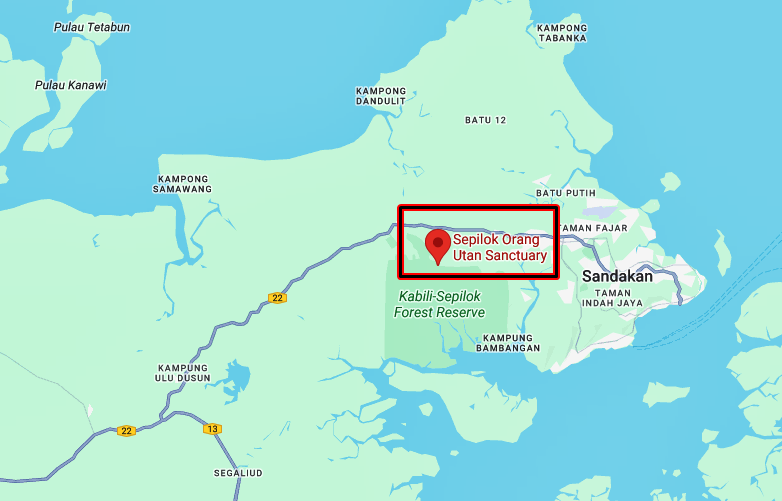
Sepilok is a small town in Sabah, 26 km from Sandakan. It is famous for its Sunbear and Orangutan Rehabilitation Centre. 
When I served with RMN ships in the 80s and 90s, our ships often stopped at Sandakan Port to refuel and fulfill other logistical needs.


TAWAU, SABAH
Tawau is another destination that I often visit when serving with Royal Malaysian Navy ships and often stop at the TLDM Jetty at KD Sri Tawau.
Tawau is the third largest city in Sabah, after Kota Kinabalu and Sandakan, located on the Semporna Peninsula, bordered by Sulu Sea to the east, the Celebes Sea in the South at Cowie Bay. 

Refer:
Wikipedia : Tawau


KALABAKAN, TAWAU
The Tragedy of Kalabakan in Tawau on December 29, 1963 is still fresh in the mind of Sabahans. Eight military personal from the 3rd Battalion Royal Malay Regiment were killed in action and 18 injured when the Indonesian Army attacked the Military checkpoint. A memorial was built at the site of the battle to commemorate the soldiers who died in the battle. Kalabakan is located about 55 km west of the town of Tawau. 


MALIAU BASIN - SABAH LOST WORLD
A region in Tongod District of Sabah with a total area of 588 sq km, about 40 km north of the Kalimantan Border. It is accessible via the town of Keningau, about four to five hour drives.
It is a remote circular plateau in Borneo that remained largely unknown to the outside world until the late 20th century. Its "mysterious" stem from its unique geology, isolation and local folklore. 
It was discovered by the west in 1947 only when a pilot almost crashed into its mist-shrouded cliffs, claiming he had found a place "higher than Kinabalu".
Scientists estimate that over 50% of the basin remains completely unexplored by humans. 
For those who trek the basin today, local rangers and Murut guides still observe strict taboos to avoid disturbing the spirits of the forest.
Common "mysteries" reported by visitors include unexplainable sounds, sudden chills, or the feeling of being watched. Taboos include not making fun of wildlife, not being loud, and asking permission before using the "restroom" in the jungle to avoid offending invisible entities.

Refers:
1. Borneo Eco Tour - Explore Maliau Basin 
2. Sabah Tourism - Maliau Basin


I have very special memory of Sabah, I have many friends from that Land Below the wind, a phrase used by seafarers in the past to described the state that lies below the typhoon belt of East Asia and never battered by any typhoons. 

Recommended Reading:
1. Land below the Winds by Agnes Newton Keith 

GOOD BYE SABAH !!

Hj Zulheimy Maamor
Lembah Keramat, K.L
8 June 2024 > 1 Zulhijjah 1445H: 6.47 p.m